

DR. KAISER DIAMANTWERKZEUGE GMBH & CO. KG got its start in the 1970s with advanced rotary dressing technology, but today the company’s engineers bring expertise across the entire grinding zone. Through Continental Diamond Tool’s partnership with DR. KAISER, North American customers are finding measurable success with lesser-known offerings like PCD wear parts to improve their operations.
Designed to withstand repeated contact and friction, work rest blades, prisms, and other critical machine components engineered with PCD wear protection maintain their performance significantly longer than traditional alternatives. Watch the video or read the article to learn more.
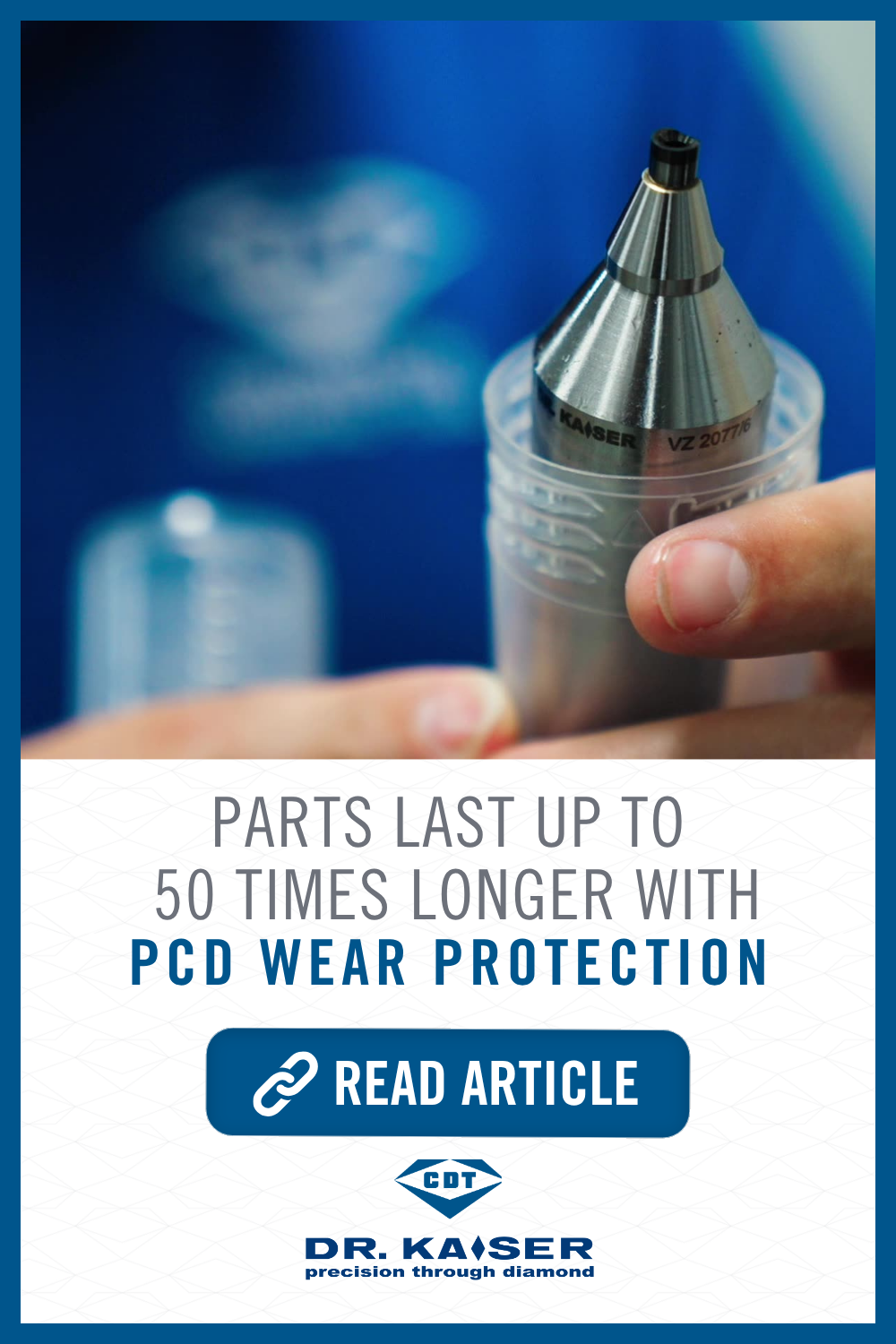
Parts Last Up to 50 Times Longer with PCD Wear Protection
Every time a component in your grinding system wears out, it starts a chain reaction on the production floor. You must stop the machine, involve an operator or maintenance technician, order and replace the worn part, and restart production.
Reducing that lost time creates an opportunity to make your process more efficient and more profitable.
“The less parts that you have wearing out equals less machine downtime, less operator involvement, and better overall efficiency,” says Aaron Holdgreve, Rotary Solutions Manager at Continental Diamond Tool.
Through our partnership with DR. KAISER, CDT helps customers in the USA, Canada, and Mexico specify polycrystalline diamond (PCD) wear parts, which have been shown to last up to 50 times longer than alternative materials like carbide.
Common Grinding Applications for PCD Wear Parts
Wear parts serve an important role wherever a machine component must guide, support, or contact a moving workpiece while maintaining a precise position.
Common examples include:
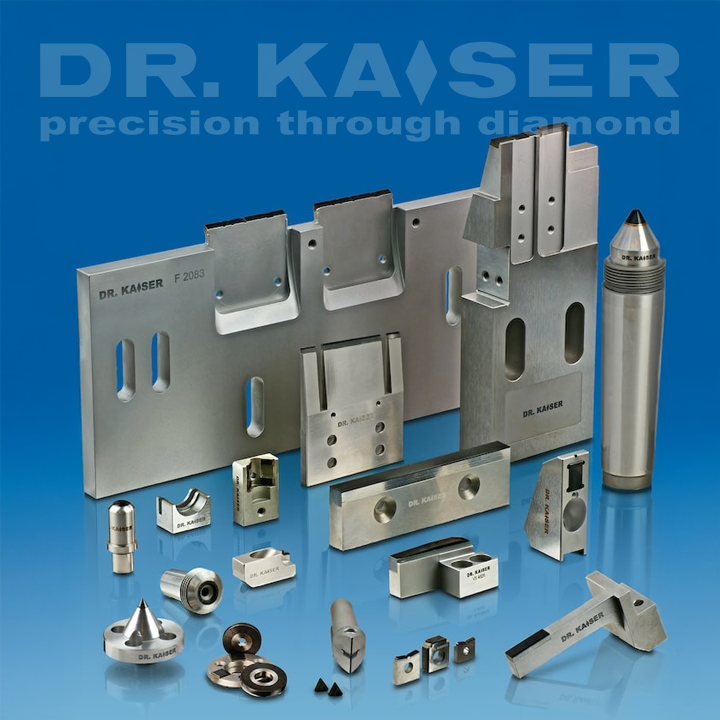
Work rest blades for centerless grinding
Prisms that support camshafts during grinding
Steady rest blocks for long or thin components
Sliding blocks for rotationally symmetrical parts
Center points for high-precision positioning
Drivers and gripping elements
Measuring and testing components
“Really anywhere you have a part being rotated that needs a rest, PCD wear parts would be a viable option for that,” says Aaron.
In centerless grinding, for example, the work rest blade supports the workpiece between the grinding wheel and the regulating wheel. Repeated contact can wear the blade and change how it positions and supports the workpiece.
Prisms perform a similar function in camshaft grinding. They support the camshaft while the grinding machine grinds its lobes. As these supporting components wear, manufacturers must adjust or replace them to maintain accurate positioning.
PCD’s Advantages in Wear-Protection
Manufacturers can use polycrystalline diamond in areas where a stationary piece is exposed to repeated contact, abrasion, or friction. Because PCD offers exceptional wear resistance, it can help a component retain its geometry and functional surface significantly longer than conventional materials.
“PCD wear protection parts are exactly as they sound,” Aaron explains. “These parts are resistant to wear due to the characteristics of PCD.”
Christoph Müller, Head of Sales at DR. KAISER, describes the materials his team recommends when a customer is dealing with a fast-wearing part:
“Whenever you have a customer who has a steel part that starts to wear or get scratches, they can try tungsten. And if tungsten is also still wearing, we can go to this polycrystalline diamond to give the best technical wear protection possible on the market.”
This progression allows manufacturers to match the wear-protection material to the demands of the application, with PCD offering the highest level of durability when conventional materials fall short. In addition to extending the component’s life, diamond wear protection can reduce friction with the workpiece and support more stable process performance.
Reducing Machine Downtime with PCD Wear Parts
Wear parts may seem insignificant compared with the grinding machine and other major components in the grinding zone, but their condition can still affect productivity.
As a work rest blade, prism, or support wears, manufacturers experience:
More frequent machine interruptions
Additional setup and adjustment time
Increased operator involvement
Reduced process stability
Changes in part positioning
Fewer completed parts per shift
Replacement-part costs
“Anytime a part wears out, you’re talking machine downtime, operator involvement, and less parts out of the machine,” Aaron says.
Investing in a wear part with a more durable material means less maintenance, adjustment, and replacement, which keeps grinders running and operators focused on production. Longer-lasting surfaces can also help work rest blades, prisms, and other supports retain their geometry through more production cycles, supporting consistent workpiece positioning over time.
Comparing a PCD work rest Blade to Carbide
Although results depend on the application, CDT and DR. KAISER customers have reported significant service-life improvements when they replaced their conventional wear parts with PCD.
“On average, we’re seeing 50 times the life when you compare a PCD work rest blade to a carbide work rest blade,” says Aaron.
A PCD component costs more initially than its carbide equivalent. However, the purchase price alone does not reflect the full effect a wear component can have on the grinding process.
Manufacturers should also consider:
How often they must replace the component
How much production time they lose during replacement
How much labor the adjustment and setup process requires
How the wear affects process consistency or part quality
How many additional parts the grinder could produce with less downtime
“Upfront initial cost will be higher, but if you consider your machine won’t be down as much, you have less operator involvement, [and you’re getting] more parts out of your grinder, it’s really a no-brainer,” says Aaron.
By evaluating total operating costs instead of purchase price alone, manufacturers can determine whether the longer life will justify the initial investment. When considering all the factors, PCD is often a cost-effective choice for demanding grinding applications.
Wear Protection
A Complete Grinding, Dressing, and Wear-Protection Resource
It has been four months since CDT announced its partnership with DR. KAISER as the company’s exclusive North American distributor. For more than 50 years, CDT has developed custom superabrasive solutions for the grinding industry. By combining that experience with DR. KAISER’s German-engineered grinding and dressing technology, North American manufacturers now have a single source for some of the industry’s most advanced solutions, supported by CDT’s sales and application engineers.
“It’s a perfect team-up for the customers because they get the service they need from a U.S.-based company and the backup from Germany with all the technologies in the dressing and grinding field,” Christoph says.
CDT’s sales and service team has completed extensive training with DR. KAISER. They can provide quotes, manage orders, and connect customers with the appropriate technical resources for tool design and application support.
The partnership also gives North American manufacturers access to a more complete range of solutions for the grinding zone, including spindle systems and PCD wear parts.
To learn whether PCD wear parts could reduce downtime and improve efficiency in your grinding operation, contact your CDT sales representative, call 1-800-443-6629, or reach out through our website contact form.
Frequently Asked Questions About PCD Wear Parts
-
Manufacturers use wear resistant parts wherever a component must guide, support, or contact a moving workpiece. Examples include centerless grinding work rest blades, camshaft-support prisms, steady rest blocks, sliding blocks, center points, and gripping elements.
-
A PCD wear part is a machine component that uses polycrystalline diamond to resist abrasion, friction, and surface damage. Manufacturers can use PCD on work rest blades, prisms, steady rest blocks, and other precision supports.
-
Service life depends on the application, operating conditions, and component design. In the applications discussed in this article by CDT and DR. KAISER, PCD work rest blades have delivered up to 50 times the life of comparable carbide work rest blades.
-
Yes. Manufacturers can use PCD on centerless grinding work rest blades to create a long-lasting surface that supports the workpiece between the grinding wheel and the regulating wheel.
-
Start by reviewing where wear occurs, how frequently you replace the component, and how much production time you lose during adjustments and replacement. CDT’s sales and application teams can work with DR. KAISER specialists to evaluate the application and recommend a customized wear-protection solution.
