

Vitrified CBN Wheels for Automated Grinding Operations
As manufacturers move toward automation and lights-out production, grinding wheels can often be a limiting factor. All grinding wheels eventually wear down and require dressing or replacement. Two important advantages of vitrified CBN technology from Continental Diamond Tool are form retention and thermal stability, which help manufacturers maintain more consistent grinding performance over longer production cycles.
In this video, CDT Application Engineer Paul Christy discusses how vitrified CBN wheels perform on STUDER machines. Learn how CDT tailors grinding wheels to help customers get the most from their automated grinding processes. For those interested in optimizing efficiency and improving quality on the STUDER favoritCNC or similar equipment, watch the video or read the article below.
Customizing Vitrified CBN Grinding Wheels for Cylindrical Grinding Platforms
Studer machines deliver the precision and repeatability manufacturers need for highly automated cylindrical grinding processes. In these environments, grinding wheel performance directly impacts unattended runtime, process consistency, and machine utilization.
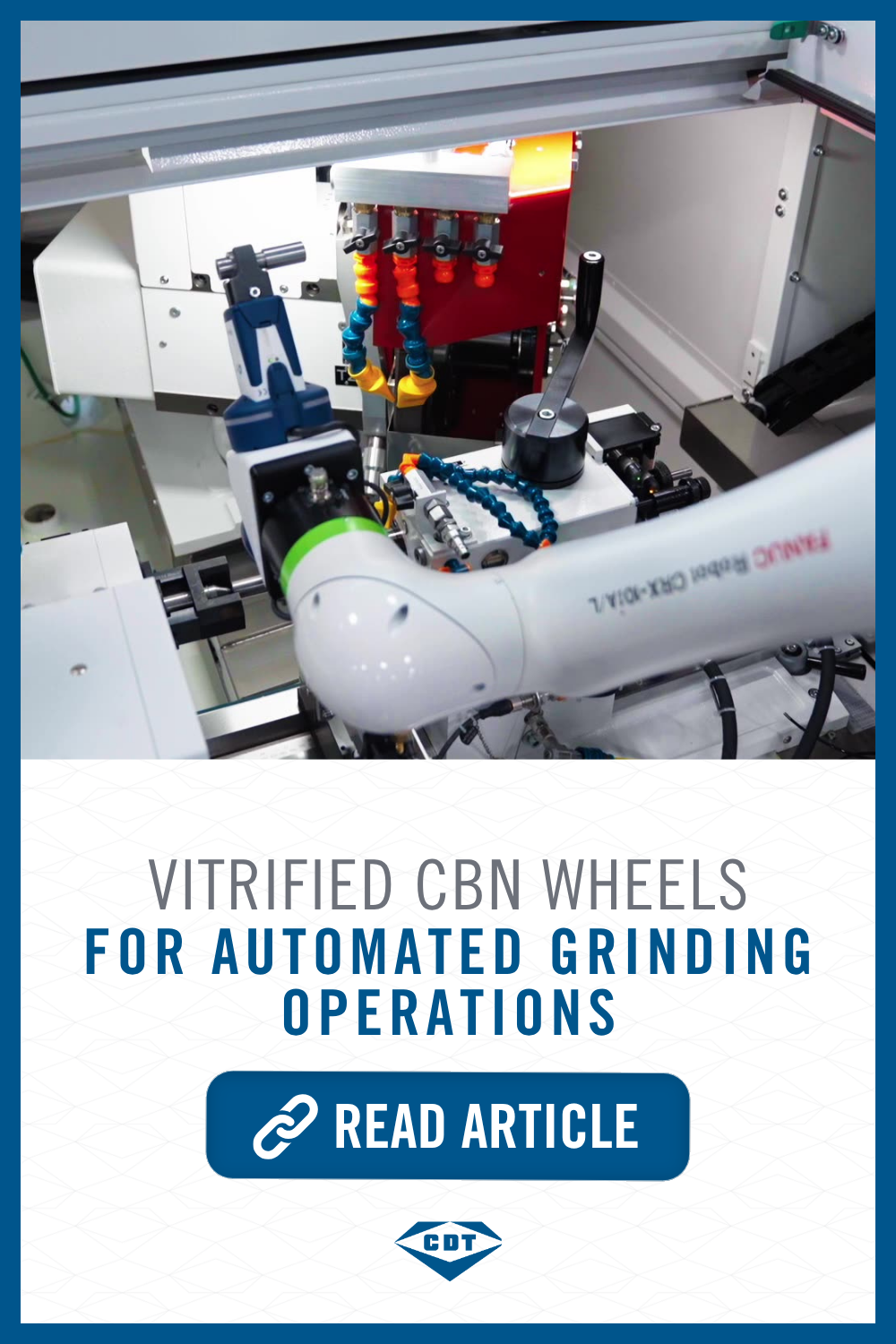
Performance Advantages of Vitrified CBN Wheels
According to CDT Application Engineer Paul Christy, vitrified CBN wheels perform especially well in automated grinding because they combine strong form retention with excellent thermal stability.
“We’ve been running this vitrified CBN technology on the favoritCNC because it works really well in a lights-out operation,” said Paul during a demonstration at the United Grinding Precision Summit.
Vitrified CBN wheels maintain profile and cutting performance longer than many conventional abrasive wheels, which allows manufacturers to reduce dressing frequency while maintaining consistent grinding conditions.
“Its form retention allows you to reduce dressing and maintain precision throughout the process,” Paul explained.
All grinding wheels eventually require dressing or replacement. However, wheel technologies that maintain form longer between dress cycles help manufacturers maximize uninterrupted runtime and reduce process interruptions during long automated production runs.
Vitrified CBN wheels also generate less heat during grinding than many conventional abrasive materials.
“One of the benefits of CBN is that it grinds cooler than other abrasives would,” said Paul. “Overall, it gives you performance in many different areas.”
By reducing heat generation, vitrified CBN wheels help manufacturers maintain dimensional accuracy, surface finish, and part quality throughout extended grinding cycles.
How CDT Engineers Customize Wheel Performance
Every grinding application places different demands on the grinding wheel. Material type, machine configuration, cycle time requirements, dressing strategy, and workpiece geometry all influence wheel performance.
Rather than running an off-the-shelf grinding wheel, CDT customers work with our engineers to design vitrified CBN wheels around the specific application.
By adjusting wheel structure, porosity, bond characteristics, and abrasive concentration, CDT engineers tailor wheel behavior to maximize important performance metrics such as:
Form retention
Thermal stability
Material removal rates
Wheel life
Cost-per-part
For example, CDT engineers can design a wheel with a more open structure to improve coolant access and support cooler grinding over long production runs. Other wheel designs may prioritize profile retention, wheel life, or material removal rates depending on the application requirements.
This application-specific engineering allows manufacturers to balance multiple grinding priorities while optimizing wheel performance for their process.
Getting the Most Value from Your Studer Machine
In automated grinding operations, even small improvements in process stability can significantly impact operational efficiency and cost-per-part.
When grinding wheels maintain form longer and generate less heat, manufacturers have less process interruptions while maintaining more consistent grinding performance throughout extended production runs.
Customized vitrified CBN wheels help manufacturers achieve:
Longer uninterrupted runtime
Reduced machine downtime
Improved dimensional consistency
Better surface finishes
Lower thermal damage risk
More predictable grinding performance
Improved machine utilization
These advantages become especially valuable in lights-out manufacturing environments where stable, repeatable grinding performance drives productivity.
Ultimately, customized vitrified CBN wheels help manufacturers take full advantage of automated grinding by improving operational efficiency and reducing cost-per-part.
To learn more about CDT’s vitrified CBN grinding wheel solutions for United Grinding’s STUDER favoritCNC and similar cylindrical grinding operations, contact the technical sales team at Continental Diamond Tool.
-
Vitrified CBN wheels provide excellent form retention, thermal stability, and consistent cutting performance. These characteristics help manufacturers maintain precision and repeatability throughout automated production cycles while minimizing process variation.
-
Because vitrified CBN wheels require less frequent dressing and maintain their profile for longer periods, machines can operate with fewer interruptions. This helps maximize spindle uptime and improve overall production efficiency.
-
Compared to conventional abrasive wheels, vitrified CBN wheels typically provide longer wheel life, improved dimensional control, and reduced heat generation. These benefits can contribute to better part quality and lower production costs.
-
Excessive heat can negatively affect surface finish, dimensional accuracy, and workpiece integrity. Vitrified CBN wheels help manage grinding temperatures more effectively, supporting consistent results during extended production runs.
-
Yes, vitrified CBN wheels can be engineered with customized grit sizes, wheel profiles, concentrations, and bond characteristics. This allows manufacturers to optimize grinding performance based on machine requirements, material specifications, and production goals.
