

How Vitrified CBN Wheels Improve OD and ID Grinding
In high-precision ID and OD grinding, maintaining consistency over long production cycles can be challenging. Grinding forces naturally wear the wheel over time, so holding parts in tolerance becomes a matter of how long the wheel can hold out before it needs maintenance. As shops move toward automated or minimally attended operation, wheel form retention and thermal control become limiting factors in how long a grinding operation can reliably run.
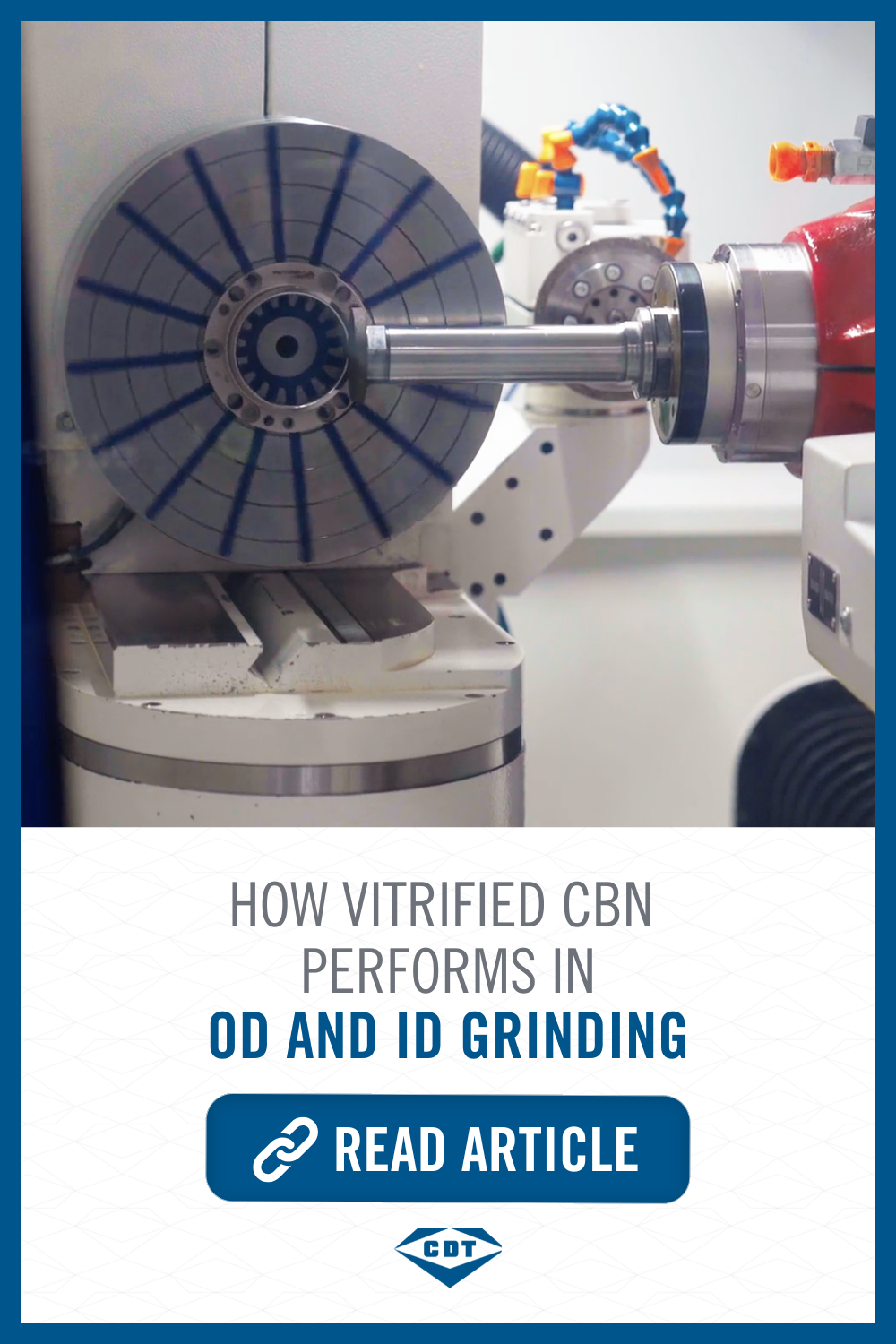
In the video below, CDT Application Engineer Andrew Olvera discusses how Continental Diamond Tool’s vitrified CBN wheels perform on the STUDER S131R in both OD and ID grinding applications. Watch the video below for a quick overview, or read on to learn why vitrified CBN wheels are often selected for production environments where long-term consistency matters.
Vitrified CBN Wheels on the Studer S131R Support Longer, More Consistent Production Runs
The STUDER S131R is widely used for high-precision internal and external cylindrical grinding in many manufacturing setups. In production environments aiming to extend run times or reduce operator intervention, the grinding wheel plays a major role in producing reliable parts.
In a demonstration at United Grinding North America, Andrew Olvera discussed the benefits CDT’s vitrified CBN wheels bring to both OD and ID grinding on the STUDER S131R. Compared to conventional grinding wheels, vitrified CBN wheels offer performance characteristics that help support stable grinding over longer production cycles.
“People prefer our vitrified CBN wheels over conventional wheels because they outperform, hold their form longer, and cut cooler,” Andrew explains. “These characteristics make them well suited for lights-out production.”
The Effects of Form Retention on Uptime and Total Process Value
As production runs get longer, maintaining part geometry increasingly comes down to the grinding wheel. CDT’s vitrified CBN wheels can offer significantly longer wheel life—up to 100 times that of conventional abrasives in some applications.
Because they hold their form longer, dressing frequency and the associated machine downtime is reduced. While vitrified CBN wheels carry a higher upfront cost, extended wheel life and fewer interruptions often offset that investment by improving uptime and reducing process variability.
For OD and ID grinding on machines like the STUDER S131R, improved form retention leads to more predictable results and longer, uninterrupted runs—key factors for shops working toward automated or unattended operation.
Vitrified CBN: Why Cooler Cutting Prevails
Thermal control is another critical factor in precision grinding. Excess heat in the grinding zone can lead to burn, surface damage, or dimensional fluctuation, particularly during continuous or high-duty-cycle production.
The open, rigid structure of CDT’s vitrified bond promotes efficient chip clearance and controlled grain exposure. This allows the wheel to cut freely while managing heat more effectively. Cooler cutting helps protect surface finish and part integrity over longer runs.
Reducing Operator Intervention for Automated Setups
Historically, grinding wheels have been one of the highest-maintenance elements in the grinding system. As wheels wear, changes in cutting behavior, form loss, and thermal load often require frequent dressing and operator adjustments, interrupting production. For shops pursuing automation, this directly limits unattended runtime.
Vitrified CBN wheels help reduce dressing intervals by delivering:
Wear-resistant abrasive grains
Long-lasting form stability
Improved thermal control
These attributes make vitrified CBN wheels a strong fit for production environments where machines are expected to run predictably with minimal oversight.
How Vitrified CBN Addresses the Unique Challenges of OD and ID Grinding
OD and ID grinding present different production challenges. ID grinding is especially sensitive to thermal buildup and wheel wear due to smaller wheel diameters and restricted coolant access. OD grinding, on the other hand, involves longer contact lengths and higher cumulative material removal, placing greater demand for a wear resistant wheel wheel.
In both cases, CDT’s vitrified CBN wheels provide cooler cutting behavior and strong form retention, helping reduce process variation over extended runs. Improved wear resistance supports more consistent results across longer production cycles on machines like the STUDER S131R.
When Vitrified CBN Makes Sense
Vitrified CBN wheels carry a higher upfront cost than conventional abrasives. For some production environments, that investment may be offset by longer wheel life, reduced dressing, and improved uptime. As part counts increase and production cycles get longer, fewer process interruptions and lower tooling replacement costs can reduce the overall cost per part.
When that break-even point is reached depends on factors such as material, removal rates, tolerance requirements, and expected runtime. Evaluating these variables helps determine when vitrified CBN makes economic sense.
If you’re running a STUDER S131R—or another high-precision grinding platform—and looking to improve consistency in automated or extended-run production, CDT’s technical sales team can help you evaluate vitrified CBN wheel options for your process with a complimentary quote.
Contact Continental Diamond Tool to discuss your material and machine setup, and learn how vitrified CBN grinding wheels can support your production goals.
-
Vitrified CBN wheels offer strong form stability and efficient heat management, making them ideal for maintaining precision in both external (OD) and internal (ID) grinding applications over extended production runs.
-
They reduce the need for frequent dressing and minimize machine downtime, allowing longer uninterrupted grinding cycles and improving overall operational efficiency.
-
Excess heat can damage the workpiece, affect surface finish, and cause dimensional inaccuracies. Vitrified CBN wheels help manage heat effectively, ensuring consistent quality during long runs.
-
Yes, in many cases. Although the initial investment is higher, longer wheel life, reduced maintenance, and improved uptime often lower the total cost per part over time.
-
Yes, their durability, reduced wear, and consistent performance make them well suited for automated or “lights-out” manufacturing environments with minimal operator intervention.
